13th Floor, Ronnie Stash & The Resistance Album Review

The debut self-titled long player from Invercargill band Ronnie Stash & The Resistance is a reminder that musical aspirations reach into the furthest and most remote shadows of the long white cloud.
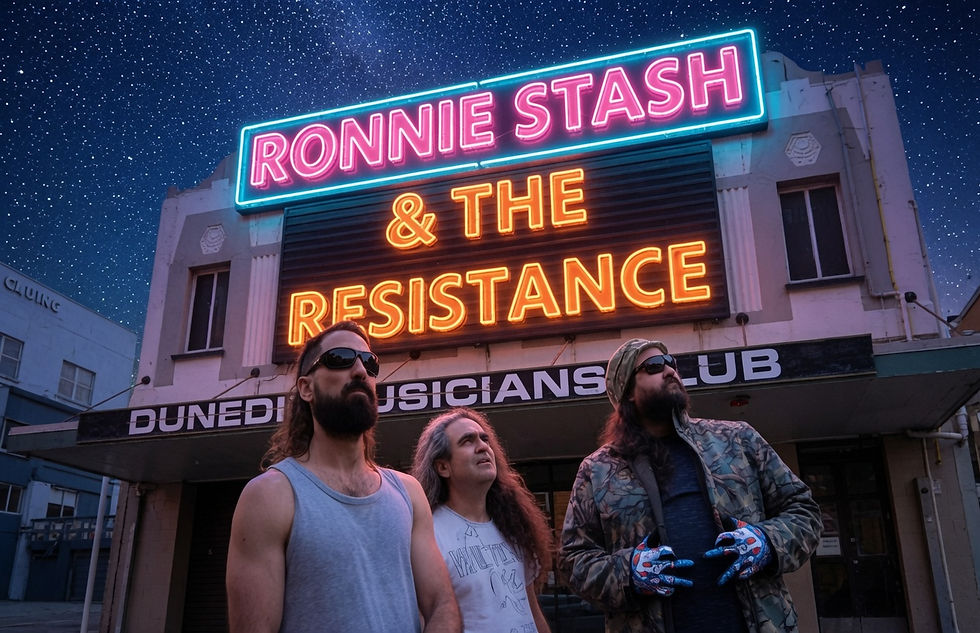
The three-piece of Jacob Ambrose on guitars and vocals, Simon Carey on bass and William Wilkes’ drums, have honed their craft in the wind-ravaged, rain-soaked areas of Southland, building a gritty style of music that blends rock, reggae, and underlined with a bluesman’s sense.
Songs of rebellion, justice (or lack of it), pain, and despair are juxtaposed with love and dedication. The album oozes independence, defiance, and strength of character chiseled from living life at the edge of the world.
Ambrose’s gravelly voice scratches across guitar licks and skanks with tight rhythms from Carey and Wilkes, bringing comparisons as diverse as Queens of the Stone Age and some of the more familiar NZ sounds rooted in reggae.
The album opens with an almost misleading soft edge; acoustic guitar riff and gentle oohs, underscored with a steely beat. Then Carey jumps in grating on wealth inequality and the ‘I’m alright, Jack’ attitude in Fat Cat Back Scratch:
Living on struggle street,
Gorse in my pocket
Like Toad the wet sprocket
That last line might be a reference to the legendary US indie-rock band Toad The Wet Sprocket, or the fictional Monty Pythonensemble… we’d have to hear from Carey on that one. But the storyline is real and an everyday challenge for thousands of Kiwis and millions more across the globe.
The resistance theme is carried through on a few of the songs on this record (yes it is available on vinyl, too) – Knuckle Head, Mudd Blood. And there are forays into anxiety and identity in Konundrum. Monsoonstrays into the mystical, fantasy world redolent of some classic metal.
Two songs address international politics and are particularly hot topics right now.
Rich Man’s War, Poor Man’s Blood is a critique of imperialism and forever wars while Orphans of Gaza attempts to give a voice to those not often heard in that terrible conflict:
Inocents lost
To the warlords they rise,
Ashes of despair
To forfeit their price…
Born in a crucible of a conflict and pain
When they resonate they echo in pain…
Both songs lean heavily into the roots, reggae sound but Ronnie Stash & The Resistance also display their ability to create drama and set the scene with effective intros to both songs.
Yet, despite all their grit, determination and fight, the band shows a lighter side in their most mainstream song Mucho Dinero. It’s a toe-tapper, for sure, and holds some cracking lines:
When life gives you lemons
You make lemonade…
We got mucho dinero…
The closing song is a classic in praise of the reggae almighty – Without Jah There Is Nothing. It’s a reminder that we are all subject to greater, mysterious forces outside of our control, in spite of the fend-for-yourself, DIY attitude that these guys exude in torrents.
In that spirit of self-survival and independence, Ambrose takes the credit for song writing and shares the production responsibilities with drummer Wilkes (who also takes on the promotion duties, too).
Ronnie Stash & The Resistance is a sign that independent music thrives in the provinces and that there are people out there who can hold their heads up and foot it with the best.
Alex Robertson



Comments